Watch how it’s made
Every step in 1:15 — from the ingredients to the finished dish.
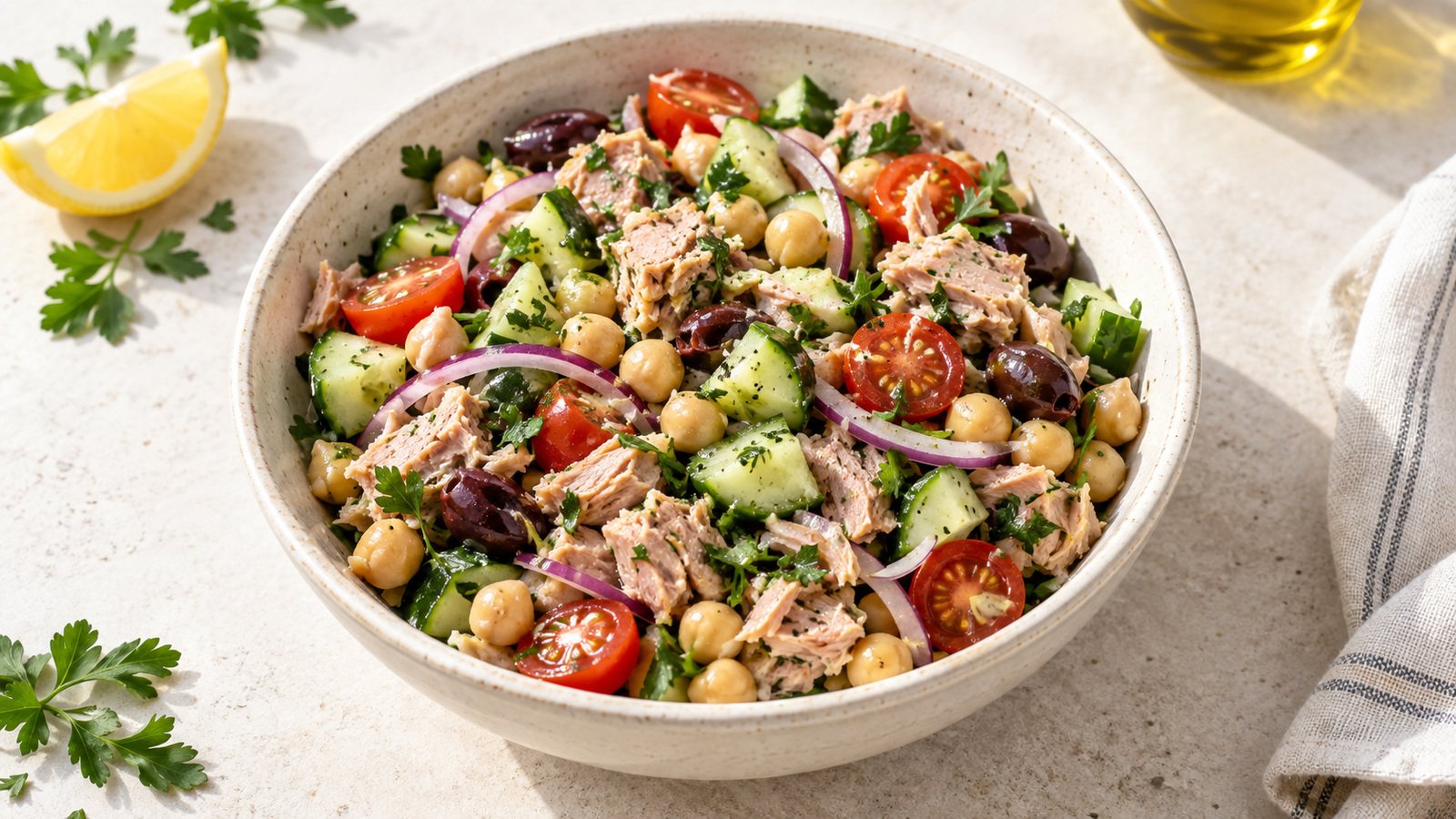
This is the lunch to make when you want to stop thinking about lunch. It takes ten minutes, needs no cooking, and holds in the refrigerator for three days without going limp. Each portion carries 11 grams of fiber, which is close to half the daily target most guidance sets, and 26 grams of protein.
The fiber comes almost entirely from the chickpeas, and that is the point of the recipe. Legumes are the most reliably useful carbohydrate for blood glucose, and they are the one most people eat least of.
Why chickpeas behave differently from other carbohydrates
A chickpea is mostly starch, but it is starch locked inside a fibrous structure that the body dismantles slowly. Legumes consistently sit at the low end of glycemic index tables for that reason, and the effect survives canning.
Half a cup per person is the right amount here. It provides roughly 20 grams of carbohydrate, of which around 6 is fiber, and enough substance that the salad works as a meal rather than a side.
Canned tuna, drained properly
Tuna in water is leaner; tuna in olive oil brings more fat and, usually, more flavor. Either is fine. What matters more is draining it thoroughly, because the residual liquid dilutes the dressing and makes leftovers watery by day two.
Press it in the sieve with the back of a spoon rather than tipping the can. You will be surprised how much comes out.
Where the sodium hides
Canned chickpeas, canned tuna and olives are all salted, and together they can push a bowl past a gram of sodium before you add anything. Blood pressure matters a great deal in diabetes, so this is worth attention.
Rinse the chickpeas under running water for thirty seconds and you remove a meaningful share of their added sodium. Choose no-salt-added tuna where you can find it, and treat the olives as a seasoning rather than an ingredient.
Dress it with lemon and oil, not mayonnaise
The standard tuna salad is bound with mayonnaise, which adds fat without adding much else. Lemon juice and olive oil do the same job and bring acidity, which this bowl needs to stop the chickpeas tasting flat.
Dress it at least ten minutes before eating. The chickpeas absorb the lemon and seasoning in a way they do not if you dress and serve immediately.
Keeping it for the week
Assemble everything except the cucumber and the herbs if you are making it more than a day ahead. Cucumber weeps water and parsley darkens, and both are a thirty-second addition on the day.
Three days is the honest limit for a dressed bowl. Undressed, with the components stored separately, you get five.