Watch how it’s made
Every step in 1:09 — from the ingredients to the finished dish.
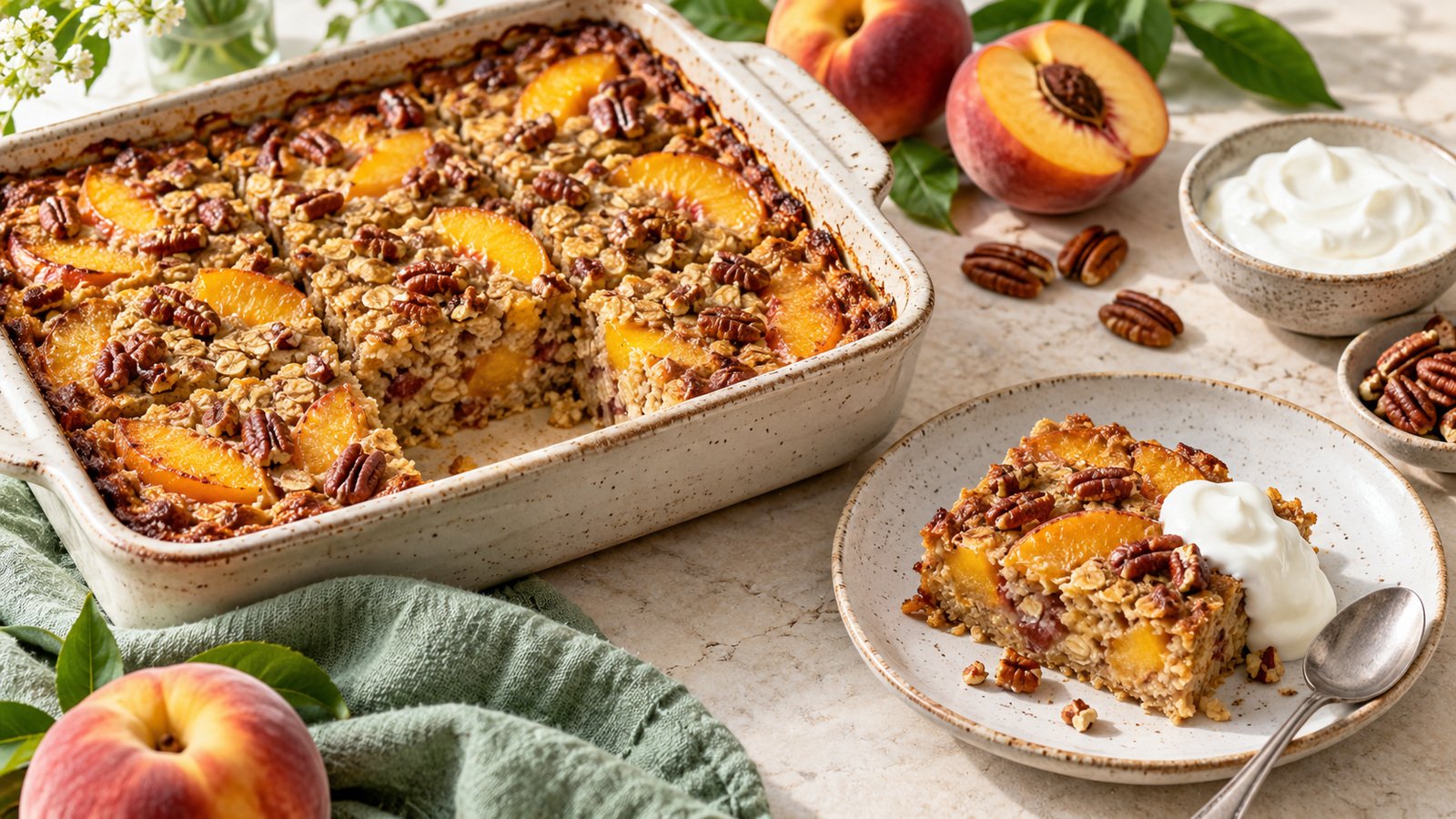
Baked oatmeal is a different dish from the stovetop kind, and the difference matters more than it sounds. Eggs and baking powder turn the oats into something closer to a soft bake than a porridge: it slices, it holds together, and it comes out of the dish in six defined portions rather than as an amount you ladle out by eye.
That last part is the reason it earns a place here. Portion creep is the quiet problem with breakfast oats. A bowl you serve yourself grows over the week; a tray you cut into six does not.
What the eggs are actually for
Two eggs bind the whole tray and add around 12 grams of protein across it, but their real job is structure. Without them this is wet oats that happen to have been in an oven.
Beat them into the milk before anything else goes in. Poured over dry oats they cook into ribbons of scrambled egg, which is not the texture anyone is after.
Peaches, fresh or frozen
Two cups of sliced peach contributes about 30 grams of carbohydrate to the whole tray, which is 5 grams per portion. That is a small price for what it does to the flavour.
Frozen peaches work and are often better out of season. Do not thaw them first. Frozen slices release their water slowly during baking, while thawed ones dump it all at once and leave the middle soggy.
Avoid canned peaches in syrup entirely. Even drained they carry the sugar the fruit absorbed, and the numbers stop being what is printed here.
Why pecans and not something cheaper
Pecans are among the lower-carbohydrate nuts and they hold their crunch through baking, which walnuts do reasonably and almonds do less well.
Keep them on top rather than stirred through. Buried in the mixture they steam and go soft; scattered over the surface they toast.
The yogurt goes in, not on
A cup of Greek yogurt in the batter brings the tray to 12 grams of protein per portion and keeps the crumb moist for days. Baked oatmeal made with milk alone dries out by the second morning.
Use full-fat or two percent if you can. Zero percent works but the texture is noticeably drier.
How it keeps
Five days refrigerated, covered. It also freezes properly in individual portions, which most baked breakfasts do not, and reheats from frozen in a couple of minutes.
Eat it warm with a spoonful of extra yogurt, or cold straight from the dish. Both are legitimate and the cold version travels.