Watch how it’s made
Every step in 1:05 — from the ingredients to the finished dish.
Raspberries are the highest-fiber fruit most people ever eat. A cup carries about 15 grams of carbohydrate and 8 grams of fiber, which means well over half of it never reaches your bloodstream as sugar. No other common fruit comes close to that ratio.
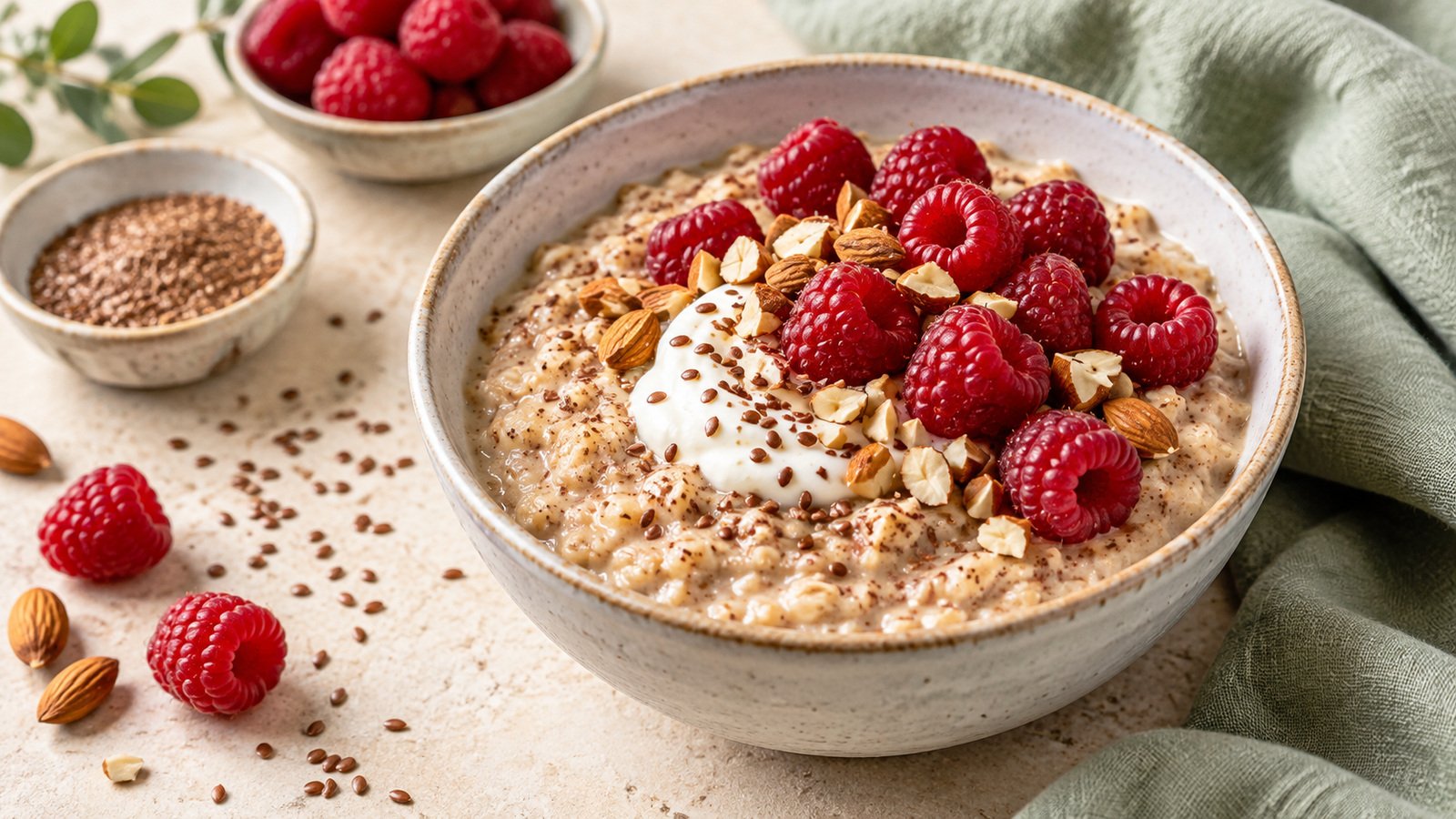
Put them with ground flaxseed and oats and you get a bowl at 28 grams of carbohydrate with 11 grams of fiber, which is a genuinely unusual number for a hot breakfast.
Why the fiber ratio matters more than the total
Fiber is carbohydrate your small intestine cannot break down. It passes through largely intact, so it contributes to the number on the label without contributing much to blood glucose.
That is why raspberries behave so differently from their carbohydrate count. Fifteen grams of carbohydrate with 8 of fiber is not the same event as 15 grams from fruit juice, where there is no fiber at all and the sugars arrive within minutes.
Ground flaxseed, not whole
This is the single most common mistake with flax. Whole flaxseeds have a hard hull that survives digestion; they go in one end and come out the other largely unchanged, taking most of their omega-3 fats and lignans with them.
Buy it ground, or grind it yourself in a coffee grinder. Two tablespoons ground gives you around 4 grams of fiber and 3 grams of plant omega-3 across the batch.
Keep it in the refrigerator once ground. The fats that make flax worth eating are the same fats that go rancid on a warm shelf, and rancid flax has an unmistakable bitter taste.
Frozen raspberries are the practical choice
Fresh raspberries are expensive and last about two days. Frozen are picked ripe, cost a fraction, and for this purpose are better: stirred into hot oats they collapse and streak the whole bowl pink without any added sugar.
Add half at the start and half at the end. The first half melts into the oats and does the sweetening; the second stays whole and gives you something to bite.
The protein problem with oatmeal
Oats have some protein but not enough to matter at breakfast. Three quarters of a cup of Greek yogurt stirred in off the heat takes this bowl from about 7 grams to 17.
If you would rather not use yogurt, a scoop of unflavoured protein powder whisked into the milk before cooking does the same job, though the texture is slightly chalkier.
Sweetening it, or not
Try it once with nothing added. Raspberries cooked into oats are more sweet than most people expect, and a bowl that needs no sweetener at all is worth discovering before you reach for one.
If it needs help, a few drops of liquid stevia or a small amount of monk fruit does it without carbohydrate.