Watch how it’s made
Every step in 1:18 — from the ingredients to the finished dish.
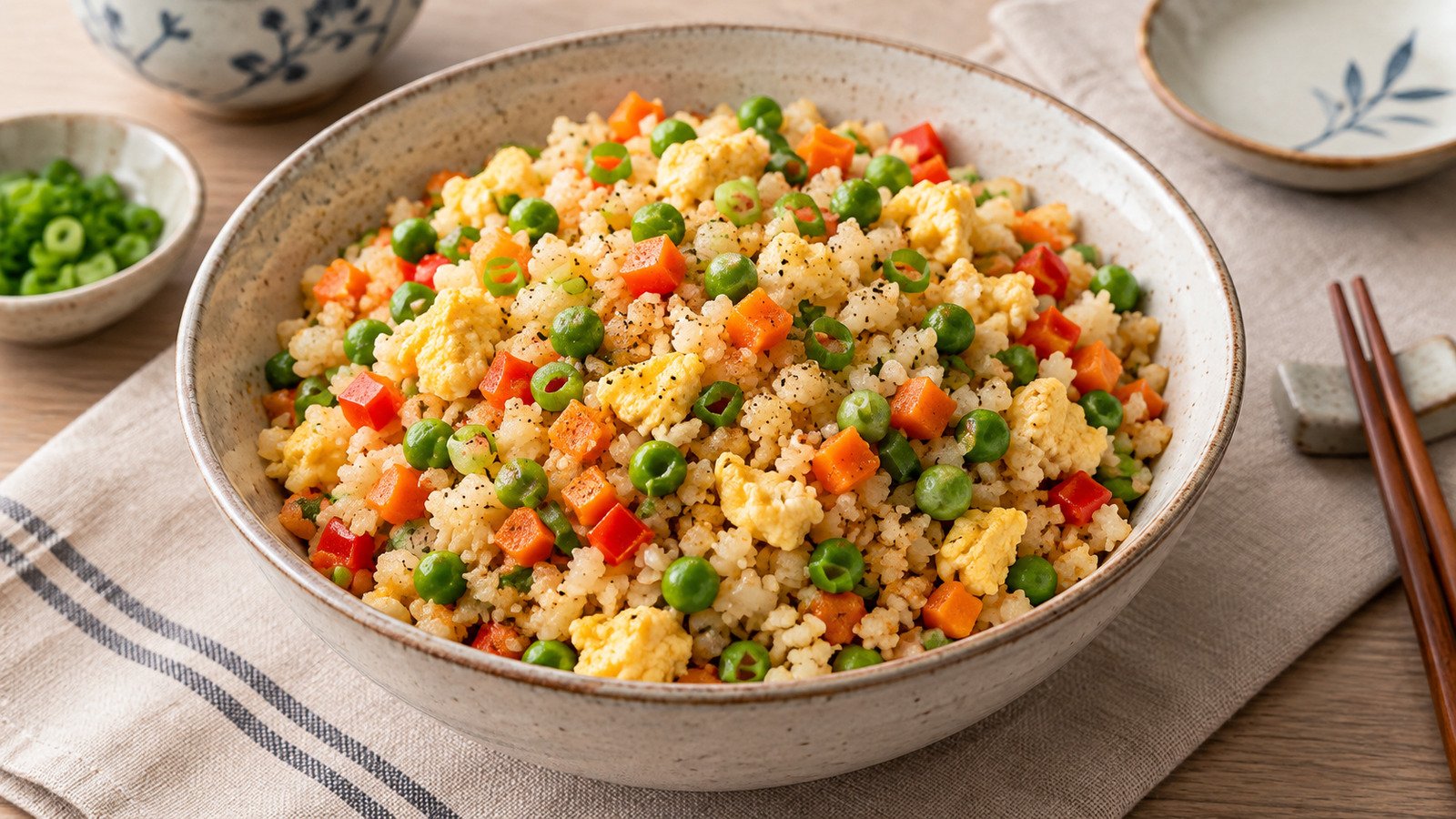
Cauliflower rice is the single largest carbohydrate saving available in everyday cooking. A cup of cooked white rice contains around 45 grams of carbohydrate, while a cup of riced cauliflower contains about 5. This dish uses that swap to turn a takeaway staple into a lunch with 12 grams of carbohydrate and 5 grams of fiber.
It will not fool anyone into thinking it is rice, and it is not meant to. What it does deliver is the same savoury, egg-and-sesame character of fried rice, in a form that leaves most of your carbohydrate allowance for the rest of the day.
Making cauliflower rice that is not soggy
Pulse the florets in a food processor in short bursts until they resemble grains of rice, stopping before any of it turns to paste. A box grater does the same job with more effort and slightly better texture. Then cook it uncovered over medium-high heat and resist the urge to stir constantly, since letting it sit for thirty seconds at a time is what produces the light browning that makes it taste cooked rather than raw.
Pre-riced cauliflower from the freezer aisle is a reasonable shortcut, but cook it straight from frozen in a hot dry pan for a few minutes first to drive off the ice before adding the oil.
Where the carbohydrate is
The cauliflower itself contributes very little. Most of the 12 grams in a serving comes from the peas and carrots, which are the two starchiest things in the pan. Cutting the frozen mix to half a cup, or replacing it with green beans and diced pepper, brings the dish under 8 grams if you want it lower.
The eggs are what make this a meal rather than a side dish, adding protein and fat that carry it through to dinner.
Turning it into a full lunch
Diced chicken, shrimp, or cubes of pressed tofu browned first and returned at the end all raise the protein into the twenties. Leftover roast pork works particularly well. For heat, add a teaspoon of chilli garlic sauce with the soy sauce.
The dish keeps three days refrigerated but does not freeze well, since the cauliflower turns watery on thawing. Reheat in a hot pan rather than the microwave to drive off moisture.