Carbohydrate counting is precise, and for many people it is the right tool. It is also a lot of arithmetic to do three times a day, every day, for the rest of your life. The plate method exists as the alternative: a visual approach that gets you most of the benefit with none of the calculation, and it is recommended by diabetes organisations precisely because people actually keep doing it.
The Plate Method
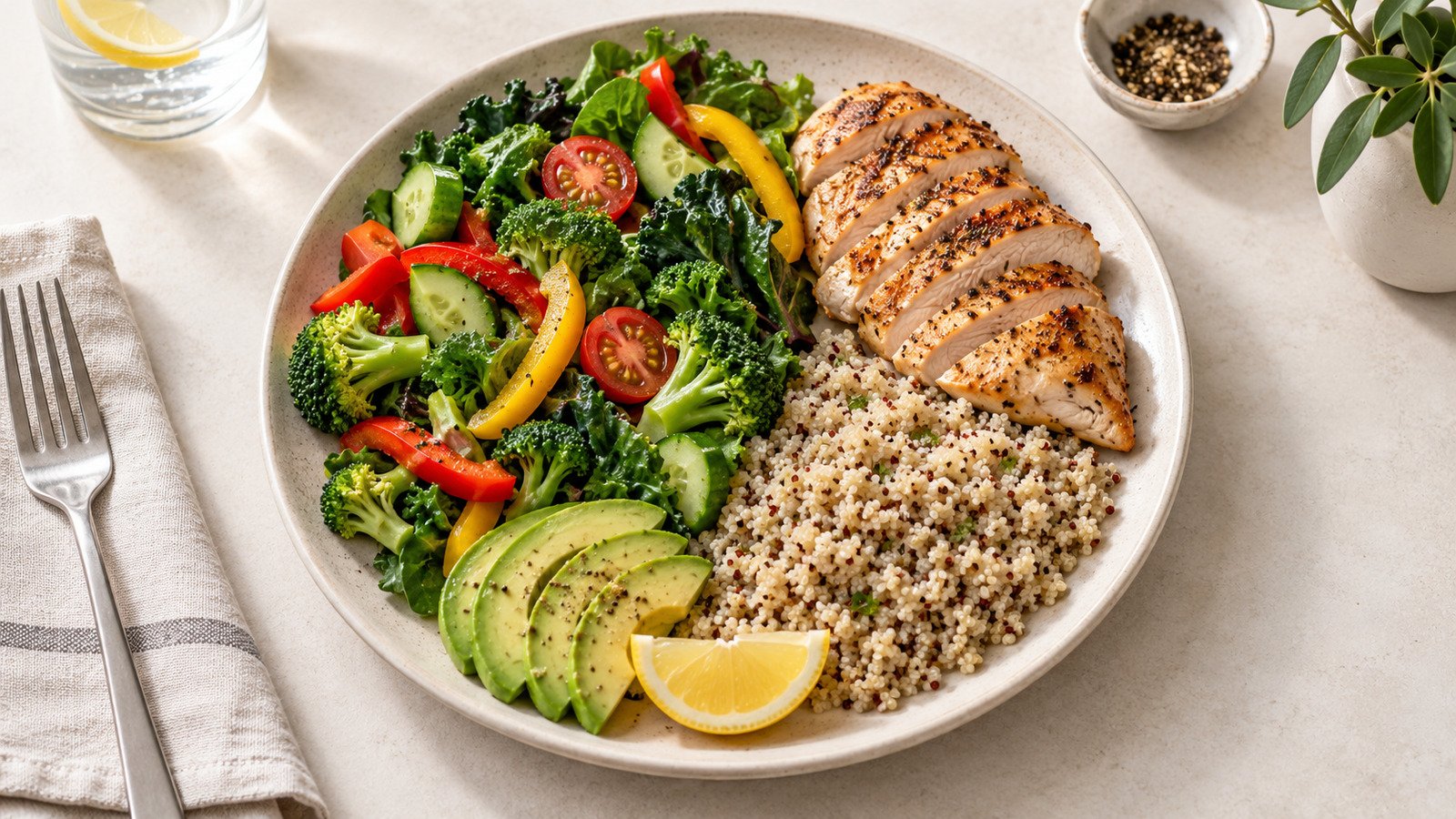
The plate method is a simple visual way to create balanced meals. Instead of measuring, you divide your plate into sections and fill each one from a different category of food. The proportions do the work that counting would otherwise do, because they automatically limit the amount of carbohydrate on the plate while ensuring there is enough protein, fat and fiber alongside it to slow digestion.
Start with a nine-inch dinner plate. This detail matters more than it sounds. The average dinner plate sold today is eleven or twelve inches across, and the same visual proportions on a twelve-inch plate deliver roughly forty percent more food. If your plates are large, using a salad plate for meals is an easy and surprisingly effective adjustment.
How to Divide Your Plate
- Half the plate: non-starchy vegetables such as broccoli, salad, spinach, and bell peppers.
- One quarter: lean protein such as chicken, fish, tofu, or legumes.
- One quarter: complex carbohydrates such as brown rice, quinoa, or sweet potato.
- Add a small portion of healthy fat such as avocado, olive oil, or nuts.
Why half the plate is vegetables
Non-starchy vegetables are the only food group you can eat in volume without meaningfully affecting blood glucose. A large serving of broccoli, green beans, cabbage, courgette, peppers, mushrooms or leafy greens contributes fiber, vitamins and minerals along with very little digestible carbohydrate. Filling half the plate with them means the portion of everything else is limited by geometry rather than by willpower.
The word non-starchy is doing real work in that sentence. Potatoes, corn, peas and winter squash are vegetables, but nutritionally they belong in the carbohydrate quarter rather than the vegetable half.
Why a quarter is protein
Protein has very little direct effect on blood glucose and it is the macronutrient most strongly associated with feeling full. A quarter of a nine-inch plate is roughly the size of the palm of your hand, which works out at something like 85 to 110 grams of cooked meat, fish or tofu, or around three quarters of a cup of legumes. Fish, poultry, eggs, tofu, tempeh, beans and lentils all qualify, and varying the source across the week is generally better than eating the same one daily.
Why a quarter is carbohydrate
This quarter is where most of the meal’s glucose comes from, and limiting it to a quarter of the plate naturally lands most people in the range their meal plan calls for. Choosing whole grains, legumes or starchy vegetables over refined options means the carbohydrate arrives with fiber attached, which slows everything down.
A quarter plate of cooked rice, pasta or potato is roughly a cup, or about the size of a clenched fist. This is smaller than most restaurant portions, which is worth knowing rather than being discouraged by.
Examples of Balanced Plates
| Meal | Vegetables | Protein | Carbohydrate |
|---|---|---|---|
| Lunch | Mixed salad | Grilled chicken | Quinoa |
| Dinner | Steamed broccoli | Salmon | Sweet potato |
| Breakfast | Spinach | Eggs | Oatmeal |
Remember that plate size matters. A 9-inch plate can help you manage portions naturally.
Adapting the method to real meals
Not everything arrives on a plate in three separate piles. Soups, stir-fries, curries, pasta dishes and sandwiches all mix the categories together, and the method still applies, you just have to apply it to the ingredients rather than to the finished dish.
For a stir-fry, that means building the pan itself to the same proportions: half vegetables, a quarter protein, and a controlled amount of rice or noodles rather than a bed of them. For a sandwich, it means two slices of bread as the carbohydrate quarter, a filling of protein, and a side salad to make up the vegetable half. For pasta, it means a smaller portion of pasta than usual with vegetables mixed through it and a protein on top.
Eating out is where the method earns its keep, because you cannot weigh anything. Look at the plate as it arrives, decide what proportion of the starch you intend to eat, and move the rest to one side at the start rather than deciding as you go. Asking for a side of vegetables instead of chips is usually possible and rarely costs anything.
The order you eat in
A body of research over the last decade has found that the sequence of a meal affects the glucose response to it. Eating vegetables and protein first, and leaving the carbohydrate until last, has been shown in several small studies to meaningfully lower the peak that follows, even when the meal is identical in content.
The likely explanation is a combination of slowed gastric emptying and hormonal signalling triggered by protein and fat arriving first. It is not a large intervention and it will not replace anything else you do, but it is free, requires no change to what you eat, and is worth trying alongside your own glucose monitoring to see whether it makes a visible difference for you.
As with everything here, treat this as general education rather than a personal prescription. A registered dietitian can adapt the plate method to your medication, your schedule and the food you actually like to eat, which is ultimately what makes any approach sustainable.