Watch how it’s made
Every step in 1:26 — from the ingredients to the finished dish.
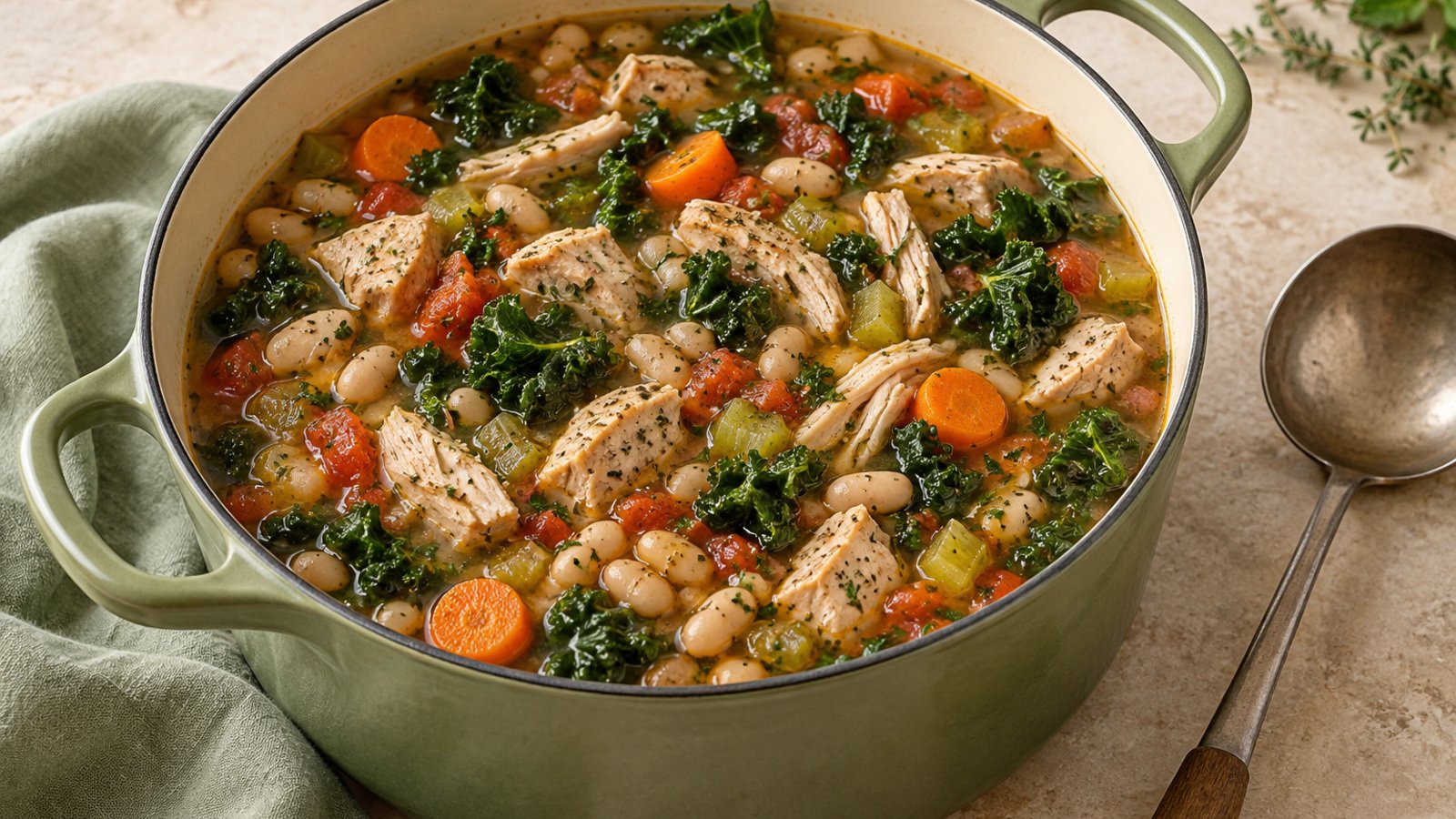
A stew is where fiber can hide in plain sight. This one carries 13 grams a serving, mostly from cannellini beans and kale, and it does not feel like a health dish while you are eating it.
It is also the most forgiving thing here. Stews do not have a narrow window; twenty minutes either side of the stated time changes very little, which makes it the right choice for an evening when you cannot stand over a pan.
Thickened by the beans, not by flour
Most stews are thickened with flour or cornstarch. This one uses the beans themselves: mash about a third of them against the side of the pot with a spoon, and the released starch thickens the liquid into something that coats.
It costs nothing in carbohydrate because the beans were already in the pot, and it produces a better texture than flour, which can taste raw if it does not cook long enough.
Chicken thighs, not breast
This is one of the few places here where thighs are the better choice. Breast meat simmered for twenty-five minutes goes stringy and dry; thighs have enough fat and connective tissue to stay tender and actually improve with time in liquid.
Boneless skinless thighs carry more fat than breast, which is reflected in the numbers, and they are usually cheaper.
Brown the chicken first, and keep the base
Sear the thighs before anything else and take them out. The browned residue left on the bottom of the pot is the foundation of the whole stew.
When the onions go in they release water that lifts it. Scrape properly with a wooden spoon; that dark layer is flavour you have already paid for.
Kale goes in at the end
Five minutes, no more. Kale simmered for twenty minutes goes olive-coloured and slippery.
Strip it off the stems, which stay tough no matter how long they cook, and tear it rather than chopping. Torn edges hold the broth better.
It is better the next day
Genuinely, not as a figure of speech. The starch that thickened the broth continues to hydrate overnight, the rosemary and thyme move through everything, and the beans absorb the liquid around them.
It keeps four days and freezes well, which none of the fresh-vegetable dishes here do.