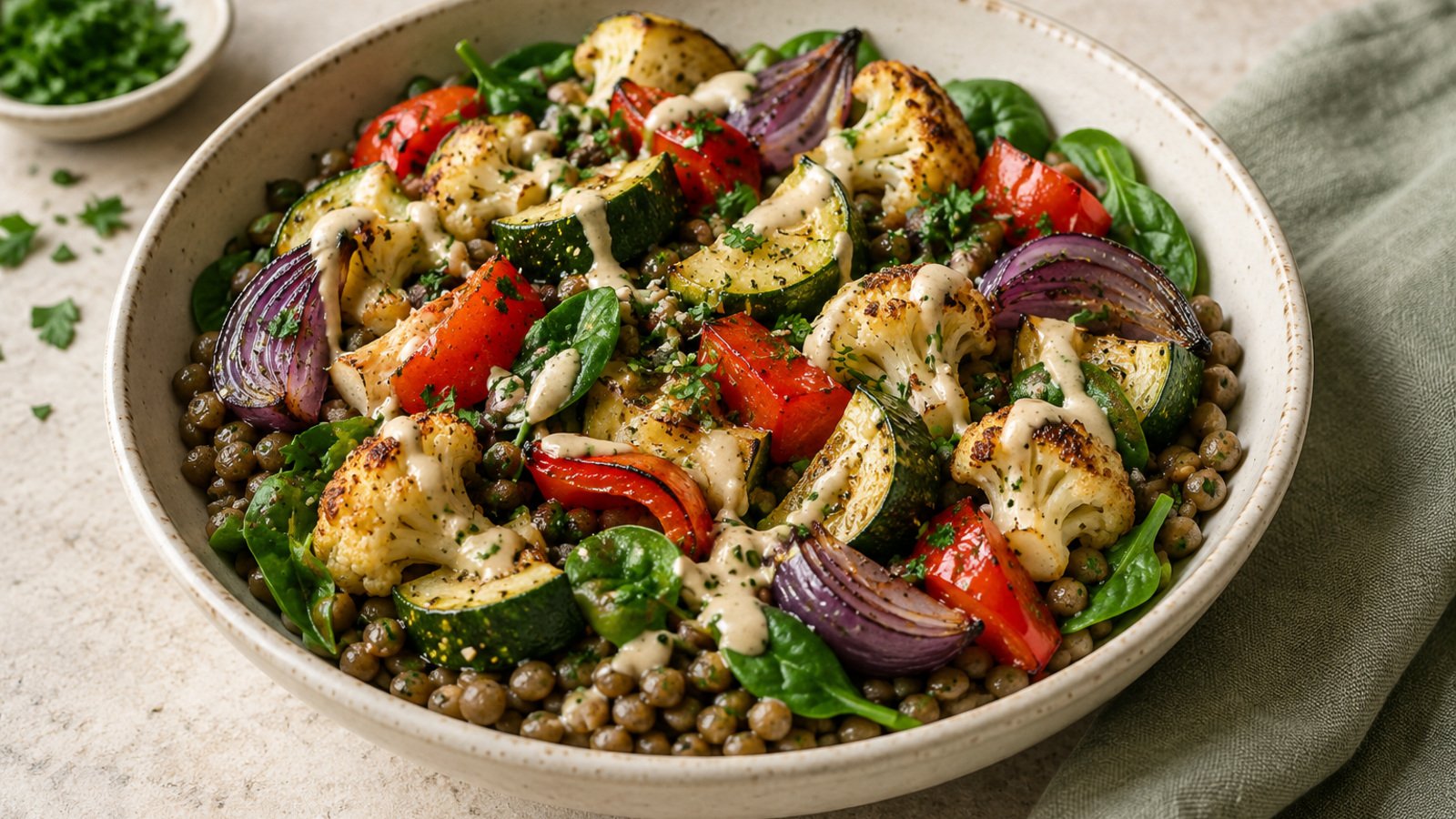
Watch how it’s made
Every step in 1:26 — from the ingredients to the finished dish.
Lentils sit at the bottom of the glycemic index tables among foods people actually eat. Most varieties test somewhere in the low thirties, which puts them below almost every grain, every bread and every potato preparation, and roughly level with the fruits usually recommended for diabetes.
They are also the cheapest protein in any supermarket, need no soaking, and cook in twenty minutes. This bowl is 34 grams of carbohydrate with 15 grams of fiber.
Use green or brown, not red
This is the choice that decides whether you get a bowl or a soup. Red and yellow lentils are split, which means their skins have been removed, and without skins they collapse completely within fifteen minutes. That is what makes them right for dahl and wrong for this.
Green, brown and especially French lentils keep their skins and hold their shape. They stay as distinct lentils you can identify on a fork.
Those intact skins are also where a good share of the fiber is, which is part of why whole lentils test lower than split ones.
Salt them at the end
Lentils simmered in salted water take noticeably longer to soften and can end up with tough skins. Add the salt once they are already tender.
What you can add at the start is a bay leaf and a halved garlic clove. Lentils cooked in plain water taste of plain water; twenty minutes with aromatics costs nothing and changes the base of the whole bowl.
Roast the vegetables hard
Four hundred and twenty five degrees, not three fifty. The point of roasting is the browning, and browning needs real heat. At a moderate oven vegetables release their water and steam in it, coming out soft, pale and slightly sad.
Give them room on the tray. Two trays half full beat one tray crowded, every time.
Roasting concentrates sugars, which does raise the glycemic response of a vegetable compared with eating it raw. With non-starchy vegetables like these the absolute numbers stay small enough that the flavour is worth it.
The tahini dressing
Tahini thinned with lemon and water makes a dressing that clings to lentils in a way vinaigrette does not, and adds fat that slows the meal down.
It will seize when you first add liquid, going thick and grainy and looking ruined. Keep whisking and adding water a spoonful at a time; it comes back smooth. Everyone panics the first time.
Made for the week
This is the most reheatable lunch here. Lentils and roasted vegetables both improve on the second day, and neither goes soggy.
Cook the whole batch, keep the dressing in a jar, and it holds four days refrigerated.