Watch how it’s made
Every step in 1:08 — from the ingredients to the finished dish.
The problem with wraps is the wrap. A standard flour tortilla carries 30 to 35 grams of carbohydrate on its own, before anything goes inside, which is most of a meal’s allowance spent on the packaging. Swapping to a whole wheat tortilla helps a little. Using a smaller one helps more.
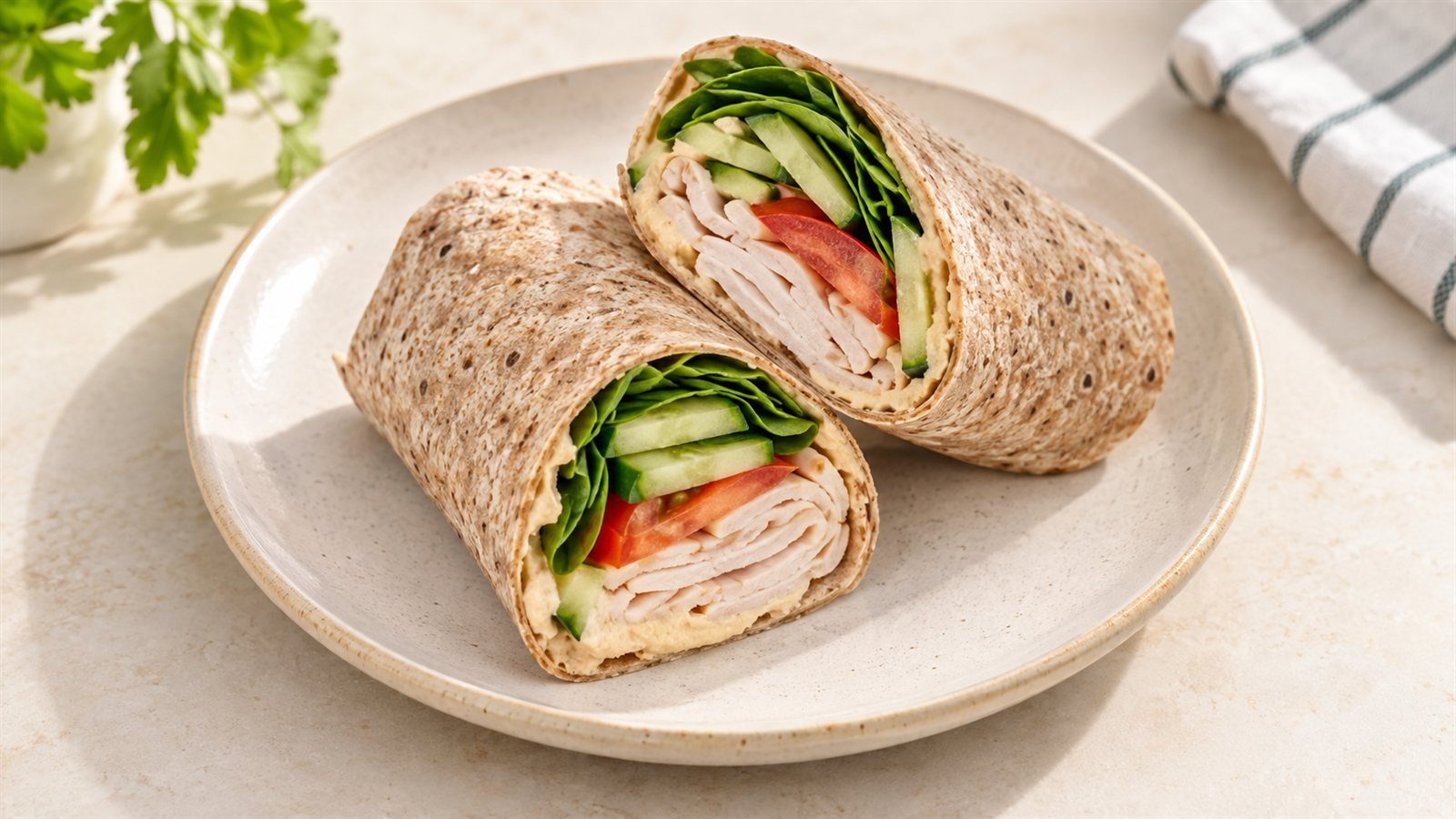
These come in at 24 grams of carbohydrate each, and they take five minutes. They are the lunch for days when you need something you can eat with one hand.
Read the tortilla label, not the front of the packet
Tortillas vary enormously. A large burrito-size flour tortilla can carry 45 grams of carbohydrate; a six-inch whole wheat one, closer to 15. Both are sold as healthy.
The word to look for on the ingredient list is whole, and it should be first. Wheat flour and enriched wheat flour are refined regardless of how brown the tortilla looks, because caramel color is cheap.
Hummus is doing two jobs
Hummus binds the wrap the way mayonnaise or butter would, but it is made from chickpeas, so it brings fiber and a little protein rather than only fat.
Two tablespoons per wrap is enough. Spread it right to the edges, which matters practically: hummus at the edge is what stops the wrap unrolling as you eat it.
Deli turkey and the sodium question
Sliced turkey is convenient, lean and high in protein. It is also a processed meat, and processed meats carry a lot of sodium and preservatives.
Look for lower-sodium versions, and treat these wraps as one of several lunches rather than the daily default. Roast turkey or chicken you cook and slice yourself is better still if you have it.
Cucumber against sogginess
Cucumber brings crunch, water and almost no carbohydrate, which is why it belongs here. It is also the ingredient most likely to make a packed wrap soggy by lunchtime.
Cut it into batons rather than rounds and pat them dry. Batons lie flat, hold their structure, and release far less water than sliced discs do.
Packing them the night before
These survive being made ahead better than most wraps because the hummus forms a barrier between the tortilla and the vegetables.
Roll them tightly, wrap in parchment rather than foil, and cut in half only when you eat. A wrap cut in advance dries at the exposed ends.