Watch how it’s made
Every step in 1:09 — from the ingredients to the finished dish.
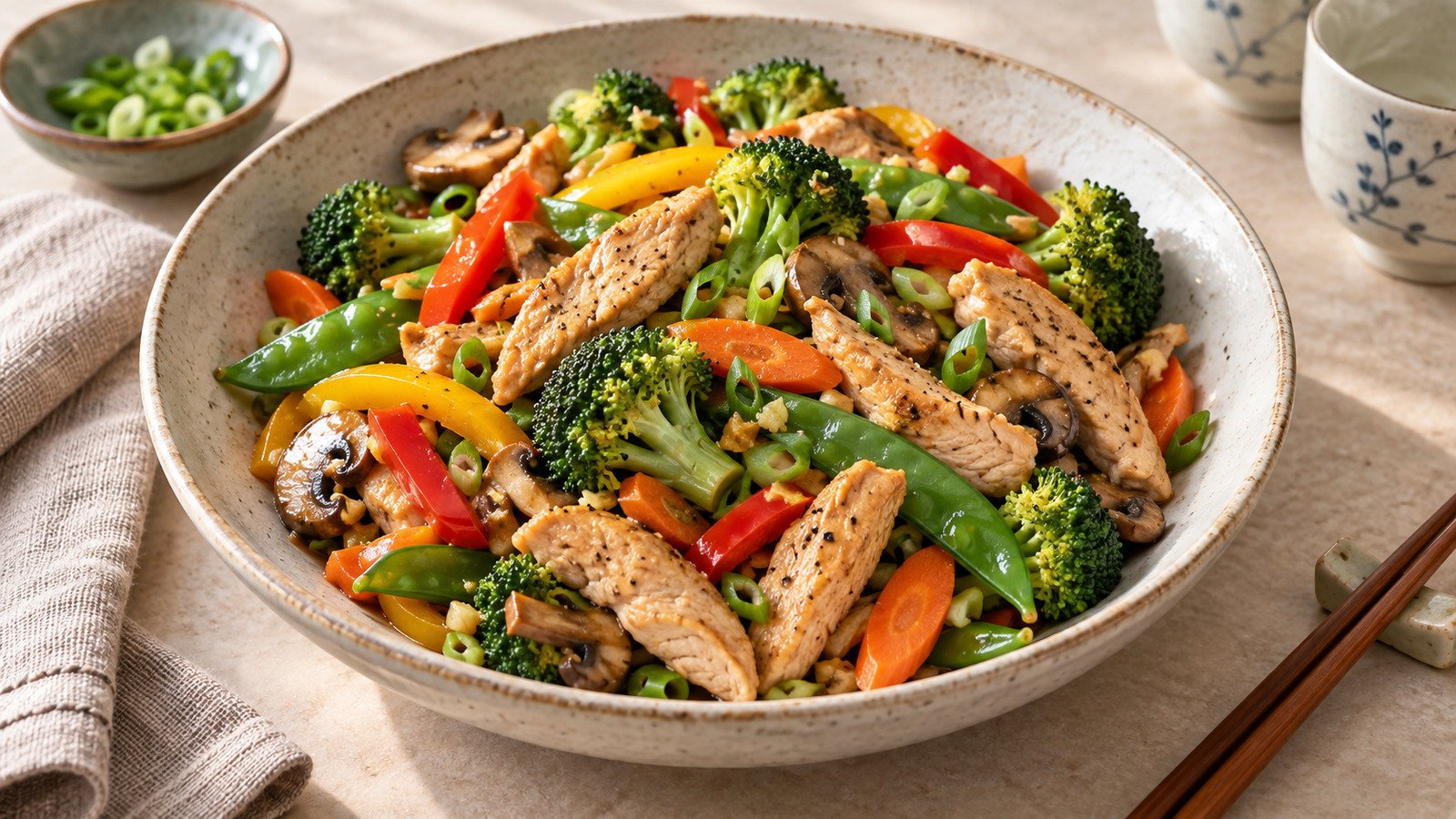
A stir-fry is one of the fastest ways to get a plate that is mostly non-starchy vegetables without it feeling like a sacrifice. Lean ground turkey supplies 26 grams of protein per serving, the vegetables supply volume, colour and fiber, and the whole thing takes fifteen minutes over high heat.
The reason takeaway stir-fries behave so differently from this one is the sauce. Commercial teriyaki and sweet-and-sour sauces can carry 10 to 15 grams of sugar per serving, and they are usually served over a large portion of white rice. Built at home with low-sodium soy sauce, ginger and garlic, the same dish lands at 18 grams of carbohydrate.
Where stir-fry carbohydrate really comes from
The vegetables in this dish contribute perhaps 12 grams of carbohydrate across a generous serving, most of it fiber and natural sugars from the carrot and pepper. The rice underneath is what usually doubles or triples the number: a single cup of cooked white rice adds around 45 grams on its own.
That makes stir-fry an unusually flexible recipe. Served as is, or over cauliflower rice, it is a low-carbohydrate dinner. With half a cup of brown rice it becomes a moderate one. You are choosing the carbohydrate load directly rather than accepting whatever the recipe assumes.
Technique matters more than ingredients
High heat and a pan that is not crowded are what separate a stir-fry from a stew. Work in two batches if your pan is small, and add the vegetables in order of how long they take, with dense ones like carrot and broccoli first and quick ones like pepper and snow peas last. Everything should stay bright and keep some bite.
Add the soy sauce at the very end. Poured in early it boils off and leaves salt behind rather than flavour.
Managing the sodium
Two tablespoons of regular soy sauce contain over 1,700mg of sodium, which is most of a day’s allowance. Low-sodium versions cut that roughly in half, and coconut aminos lower it further still. Since blood pressure so often needs managing alongside blood glucose, this is a small swap with a real effect.
Rice vinegar, fresh ginger, garlic, chilli and a squeeze of lime all add flavour without sodium, which lets you use less soy sauce without the dish tasting flat.