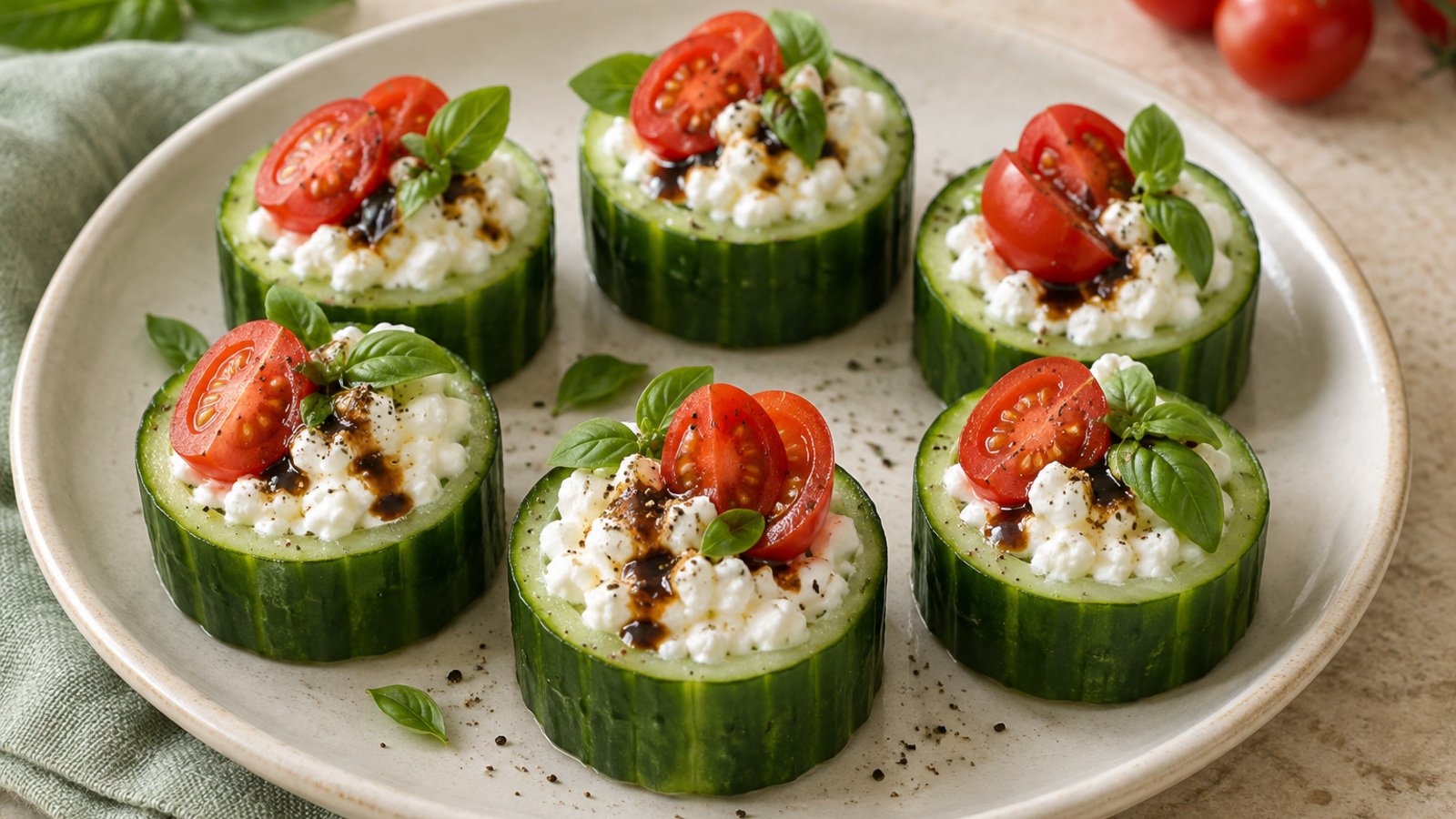
Watch how it’s made
Every step in 0:56 — from the ingredients to the finished dish.
A caprese is tomato, mozzarella and basil, and the mozzarella is the part worth reconsidering. Fresh mozzarella carries around 6 grams of protein an ounce with 6 grams of fat. Cottage cheese carries about 3 grams of protein an ounce with under half a gram of fat, which per calorie is considerably more protein.
Swapping one for the other turns a light salad into a snack with 18 grams of protein for 9 grams of carbohydrate.
Cottage cheese has changed
It spent decades associated with joyless dieting and it has been quietly rehabilitated, mostly because the protein numbers are hard to argue with. A cup carries around 24 grams, which is comparable to Greek yogurt and more than most cheeses per calorie.
Small curd blends into things better; large curd holds its texture and is the right choice when you want to see it, as here.
Buy the plain kind and check the sodium. It varies enormously between brands, from around 300mg a cup to over 900, and low-sodium versions are widely sold.
Salt the tomatoes first
This is the step that separates a good caprese from a watery one. Halve the tomatoes, salt them lightly and leave them ten minutes. They release water and their flavour concentrates.
Drain that liquid away or the whole cup ends up sitting in pink water. It also seasons the tomatoes properly from the inside, which sprinkling salt at the end does not.
The balsamic question
Balsamic glaze, the thick syrupy kind sold in squeezy bottles, is reduced with added sugar and commonly carries 8 to 12 grams of carbohydrate in two tablespoons.
Plain balsamic vinegar carries about 2 grams a tablespoon and gives you the same acidity. If you want the thickness, reduce a quarter cup of ordinary balsamic in a pan for five minutes; it thickens on its own with nothing added.
Tear the basil, and do it last
Cutting basil with a knife bruises the cut edges and they blacken within minutes. Torn by hand it holds its colour far longer.
Add it at the table. Basil sitting in an acidic dressing for even ten minutes goes dark and limp.
How this differs from the other cottage cheese snacks here
There are three now and they are deliberately different. The cucumber cups are savoury and herb-driven, the strawberry jar is sweet and eaten with a spoon, and this one is a salad built on acidity and fresh tomato.
What they share is the reason cottage cheese keeps appearing: it is the highest-protein, lowest-carbohydrate base available for a snack, and snacking is where most blood glucose plans come apart.