Watch how it’s made
Every step in 1:00 — from the ingredients to the finished dish.
Guacamole is already a good snack. It is almost entirely fat and fiber, it carries very little carbohydrate, and nobody needs convincing to eat it. Its one weakness is protein: a cup of it has about 3 grams.
Blending edamame through it changes that. This version carries 9 grams of protein a serving while keeping the carbohydrate at 12, and edamame is the only common vegetable that brings complete protein to the bowl.
What the edamame does to the texture
Edamame blends to a slightly grainy paste on its own, which sounds like a problem and is not. Against the fat of the avocado it reads as body rather than grit, and it stops the dip being the loose slick that pure guacamole becomes after an hour.
Blend the edamame first, alone with the lime and a splash of water, until it is as smooth as it will go. Then add the avocado and pulse rather than blend, so some texture survives.
Why this browns more slowly
Guacamole goes brown because an enzyme in the avocado reacts with oxygen. The edamame here dilutes the avocado and the lime juice slows the reaction, so this keeps its colour noticeably longer than plain guacamole does.
It still browns eventually. Press cling film directly onto the surface, touching it, so there is no air gap. That works better than any of the stone-in-the-bowl folklore.
Frozen shelled edamame, boiled properly
Three minutes in boiling water and then straight into cold. Undercooked edamame stays squeaky and refuses to blend smooth; overcooked goes grey and loses its fresh green flavour.
The cold water matters. It stops the cooking immediately and sets the colour, which is why this dip is bright green rather than olive.
Lime, and rather a lot of it
Between avocado and soy bean this is a soft, rich, mild bowl. Without enough acid it tastes flat and heavy.
Three tablespoons for this quantity is more than most recipes call for and it is the right amount. Taste before you serve; if it seems dull rather than sharp, it needs more lime, not more salt.
Where else to put it
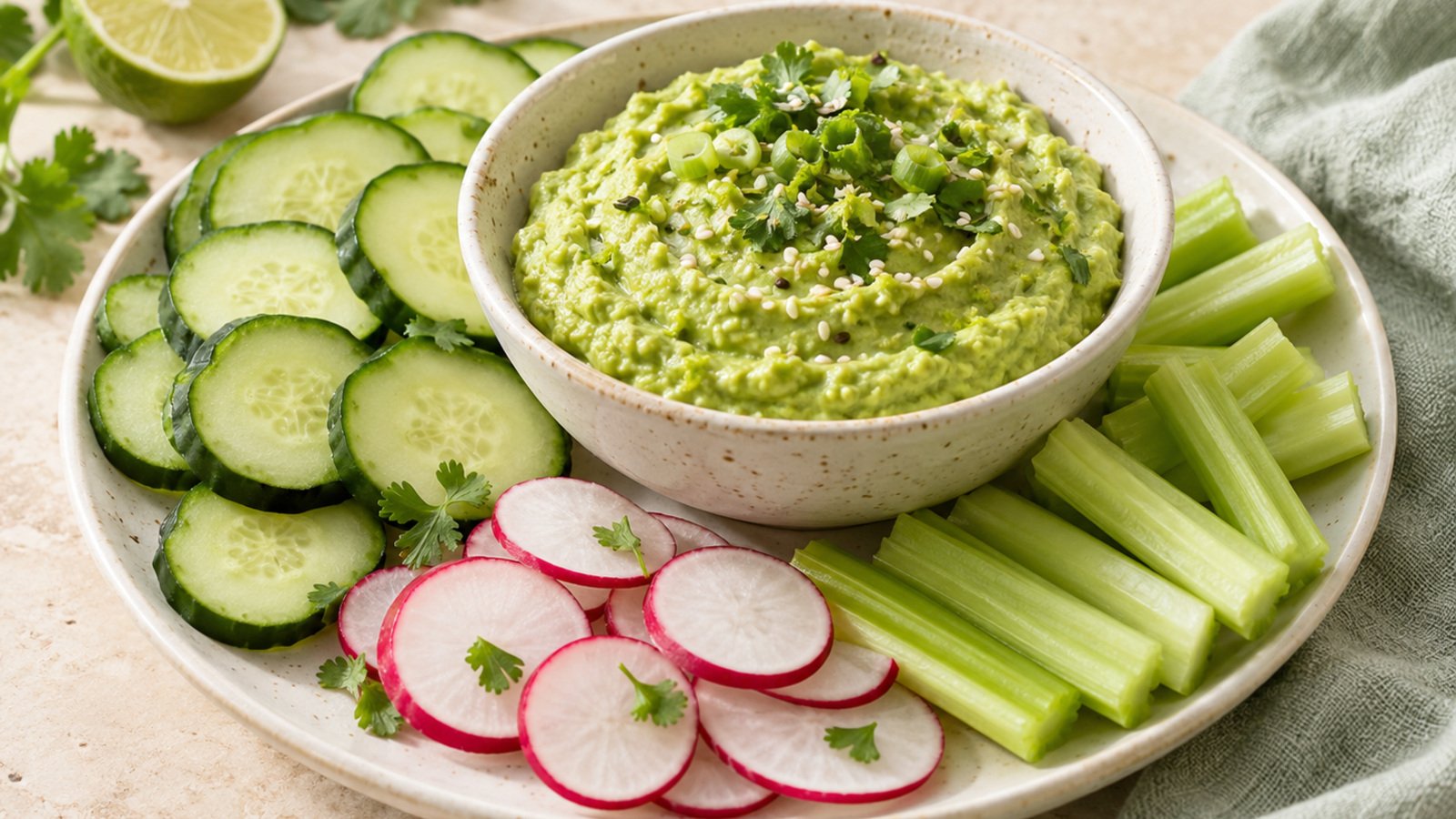
It works as a dip with raw vegetables, which is how the numbers above are calculated. It also works spread in the turkey roll-ups elsewhere in this collection, spooned onto the buffalo chicken avocado halves, or thinned with a little water into a dressing for a grain bowl.
That last one is worth trying. Thinned, it coats quinoa or lentils in a way most dressings do not.