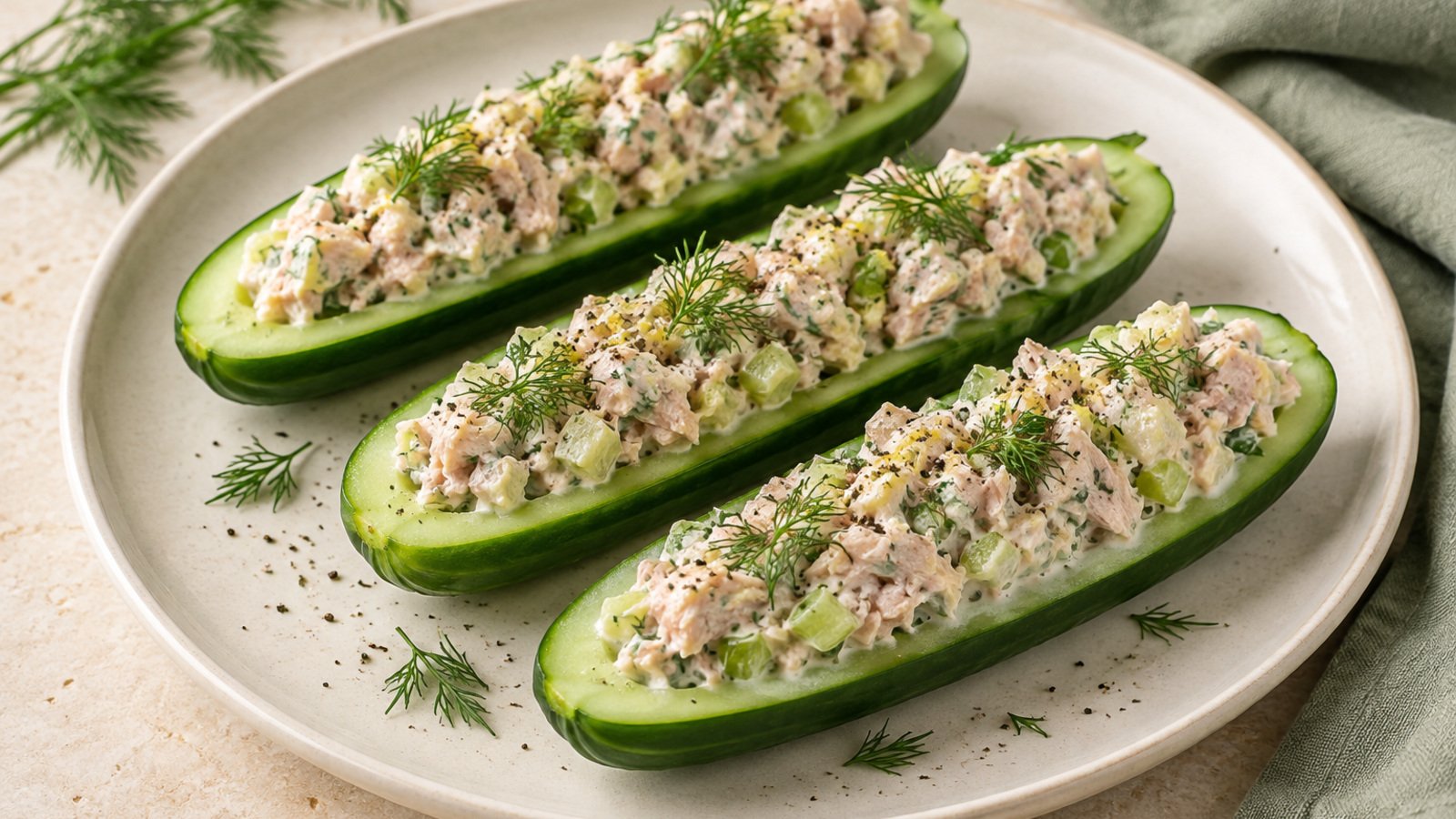
Tuna Cucumber Snack Boats

10 min Prep 2 Servings
Tuna Cucumber Snack Boats

Watch how it’s made

Every step in 1:06 — from the ingredients to the finished dish.

This is the lowest-carbohydrate item on the site at 6 grams, and it takes ten minutes with a tin from the cupboard. It is the snack for the afternoon when you are genuinely hungry rather than bored, and when whatever you eat next needs to not move your glucose much.

Twenty-two grams of protein in a snack is unusual. Most things eaten between meals carry almost none, which is the reason they stop working an hour later.

Water-packed, not oil-packed

The distinction matters more than it sounds. Tuna in water drains to almost pure protein. Tuna in oil retains a good deal of that oil even after draining, and the oil used is usually soybean or sunflower rather than olive.

If you buy oil-packed, buy the kind packed in olive oil and count it. If you buy water-packed, drain it hard by pressing the lid down over the tin.

A word about mercury

This is worth being straight about. Light skipjack tuna is low in mercury and the FDA lists it among the fish safe to eat two to three times a week. Albacore, sold as white tuna, carries roughly three times as much and the guidance is once a week.

For a snack you might make often, light tuna is the sensible default. If you are pregnant, the advice is stricter and worth checking with your own care team.

Yogurt instead of mayonnaise

Two tablespoons of mayonnaise carry about 20 grams of fat and no protein. The same amount of Greek yogurt carries under a gram of fat and 3 grams of protein.

Yogurt alone tastes lean and slightly sour, so a teaspoon of Dijon and a squeeze of lemon do the work the mayonnaise was doing. A single teaspoon of mayonnaise stirred in alongside the yogurt is a reasonable middle if you miss it.

Making the boats

Halve the cucumbers lengthways and run a teaspoon down the middle to scoop out the seeds. That channel is what holds the filling, and the seeds are the wettest part of a cucumber.

Leave the skin on. It is where most of the cucumber fiber sits, and it stops the boat collapsing.

What the celery is for

Texture, mostly. Tuna and yogurt together are soft, and without something crunchy the whole thing is one note.

Dice it fine. Large pieces of raw celery are stringy and dominate; finely diced it disappears and just registers as crunch.

Ingredients

  • 2 cans (5 oz each) light tuna in water, drained well
  • 2 English cucumbers
  • 1/3 cup plain Greek yogurt
  • 1 tsp Dijon mustard
  • 1 tbsp lemon juice
  • 2 celery stalks, finely diced
  • 2 tbsp red onion, finely diced
  • 1 tbsp fresh dill, chopped
  • 1 tbsp capers (optional)
  • Salt and black pepper

Instructions

  1. Drain the tuna hard, pressing the lid down over the tin to get the water out.
  2. Mix the Greek yogurt with the Dijon, lemon juice, salt and pepper.
  3. Flake the tuna into the dressing and fold through the celery, red onion, dill and capers if using.
  4. Halve the cucumbers lengthways and scoop out the seeds with a teaspoon to make a channel.
  5. Spoon the tuna mixture along the channels and cut each half into shorter lengths.
  6. Scatter a little extra dill and black pepper over before serving.

Nutrition (per serving)

195 kcal
Calories
6 g
Carbs
22 g
Protein
4 g
Fat
2 g
Fiber

Tips

Scoop out the cucumber seeds and throw them away. They are the wettest part of the vegetable, and left in they leak into the tuna within twenty minutes and turn a firm filling into a loose one sitting in liquid.

Frequently Asked Questions

Light skipjack in water. It is lower in mercury than albacore, which the FDA suggests limiting to once a week, and water-packed drains to almost pure protein.

You can. Two tablespoons add about 20 grams of fat and no protein. A teaspoon of mayonnaise stirred into the yogurt is a reasonable middle ground.

The tuna mixture keeps two days refrigerated. Fill the cucumber only when you are about to eat, since it weeps once cut.

Yes, and it brings more omega-3. Drain it the same way and remove any large bones, though the soft ones are edible and a good source of calcium.

References

Where the general guidance on this page comes from. Figures are population-level recommendations, not advice for your own situation.

Glucose Smart Kitchen Team

We are a small team of home cooks and keen readers of nutrition guidance, not doctors or dietitians. We write the site we wanted when diabetes first came into our own lives: recipes that work on a weeknight, and plain explanations of the advice published by bodies like the ADA and the CDC.

Join Our Community

Get new recipes, health tips, and meal plans delivered to your inbox every week.